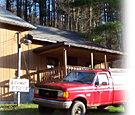
"The Evening Campfire" from
The Herald, June 29, 2008
Camping out on the ANF
wilderness islands
As Todd and I pushed our
canoe into the river, we saw how
heavily-laden it was. Dome tents, sleeping bags, a
cooler full of food and drinks and bundles of clothing
and gear filled up the wide-hulled 14-foot watercraft,
along with cleaning stuff and plenty of trash bags. When
you plan to camp overnight on one of the Allegheny
National Forest islands, you want to make sure you leave
no trace behind.
We put in near Buckaloons Campground north of Dunn's
Eddy on Saturday, but not until 4 p.m. We'd been delayed
for hours by thunderstorms, but now, finally, the
tempests had passed, and we were on the river. Donna Rai'
moved quickly downstream in her new camo-colored kayak,
and Brad followed right behind in his tiny whitewater
craft. Todd and I brought up the rear in our heavy
freight canoe.
Over 100 islands populate the Middle Allegheny River
corridor from Kinzua Dam to Oil City, and seven of them
totaling 368 acres between Buckaloons and Tionesta
comprise the Allegheny Islands Wilderness, the smallest
federally-designated wilderness in the country. There
are no facilities on any of these lush green isles, but
rough camping is permitted, and that's what we had in
mind.
We paddled six miles downstream over the next couple of
hours and enjoyed the scenery, with mist hanging on high
green ridges above the powerful gray river under cool,
cloudy skies. At 6:30 we put in at R. Thompson Island, a
30-acre federal sanctuary near the onshore village of
Althom. We hauled gear, put up our tents and began
gathering rain-soaked firewood.
It would have been easier to bring dry firewood from
home, but that's unethical and prohibited in the ANF
right now because of the emerald ash borer, an invasive
insect from Asia that kills ash trees. The ash borer is
a weak flyer, but it has traveled across much of the
eastern U.S by hitchhiking in firewood that campers have
carried from place to place. ANF officials will levy
fines and penalties to individuals who knowingly violate
the prohibition.
We weren't carrying any illegal firewood, but we did
bring one
artificial fireplace log, which burned hot enough and
long enough to dry the wet branches we'd gathered and
render them burnable. Hey, we weren't exactly pioneers
out there and a little technology helped a lot.
We named our campsite Muddy Point because of the wet
conditions, but it was a great spot, with high level
ground for two tents and a large stone campfire ring.
From 7 p.m. to midnight, we feasted on hot dogs, snacks
and cold beverages and laughed out loud and told stories
beside the bonfire in the dark forest night, lively
waters flowing past us on both sides.
In the morning we awoke to the outdoor melodies of
birdsong in the trees, rushing river waters and the
daybreak quacking of common mergansers hurtling upstream
just above the riffles. We broke camp and cleaned up
every particle of mess we could find, including three
pop cans and several candy wrappers left by prior
visitors. This was a precious national forest
wilderness, and we were determined to leave it even more
pristine than we found it.
Then we paddled seven more miles downstream in the
bright morning sunshine to the town of Tidioute, where
we'd parked a vehicle the day before. Along the way we
spotted two immature bald eagles soaring above the
treetops. Todd got a good photo of one when it perched
on an oak crag above the river and I steered the canoe
right under it. We also got great pictures of a hen
merganser leading her fluttering troupe of six fuzzy
ducklings along the shoreline. We didn't fish much, but
we did get a couple of undersized smallmouth bass on
crankbait lures. This was the first overnight island
camping trip in the 22-year history of F-Troop Camp, and
we had a grand time. D-Rai' and I plan to do it again
when we go up on vacation in July.
<<
back to columns |